
A shared Indian meal is shaped as much by its accompaniments as by its curries. Indian side dishes for a dinner party can include rice, naan, salads, cooling raita and lively pickles, each bringing a different flavour or texture to the table. Together, they help guests balance rich sauces, aromatic spices and heat with every mouthful.
It’s easy to see why choosing sides can feel just as important as choosing the mains: the right mix makes a shared meal feel generous and harmonious. This guide explains what counts as an Indian side dish and how to pair rice, naan, salads, raita and pickles with the dishes around them. You’ll find simple ways to bring warmth, freshness, crunch and cooling contrast to your dinner party table.
Key Takeaways
- Think of sides as the accompaniments that bring balance and variety to a shared Indian meal.
- Pair roasted Indian vegetables with turmeric yoghurt for a savoury, creamy contrast.
- Choose rice, naan, salad, raita and pickles to complement the flavours and textures of your mains.
- Balance saucy dishes with drier textures and cooling accompaniments for a more harmonious spread.
1. What is an Indian Side Dish?
An Indian side dish is an accompaniment served alongside a main, adding contrast, freshness or texture. A dry vegetable dish, for instance, brings bite beside a saucy curry, while yoghurt can soften the heat. Sides complement curries and tandoori dishes rather than replacing the main. They may be vegetarian, while the full table can include vegetarian and non-vegetarian mains.
For a dinner party, build variety around what your guests can enjoy. A vegetarian spread might include paneer, vegetables and biryani, with potatoes for a heartier texture. Paneer is dairy, so vegan guests need a plant-based main. Vegetable sides and yoghurt can round out the meal, but they do not replace a suitable main for someone avoiding animal products. Keep dietary requirements in mind as you choose each dish.
A mixed menu can balance meat, vegetarian dishes and accompaniments without making every plate the same. For a small group, consider meat mains, a vegetarian main, a tandoori dish, rice or biryani, breads and raita. This offers a choice of textures, from tender, saucy mains to bread for scooping and cooling yoghurt. Keep the vegetarian main distinct from the meat dishes.
Use roasted vegetables as a colourful bridge between those choices. Serve the potatoes with turmeric yoghurt beside the mains, and guests can add a creamy, gently spiced contrast to each mouthful. This is a practical way to make a vegetarian side visible on a shared table, alongside paneer, biryani or meat dishes. The mix of options helps the meal feel complete while leaving room for each guest to choose their own serving.
2. Rice, naan, salad, raita and pickles as accompaniments
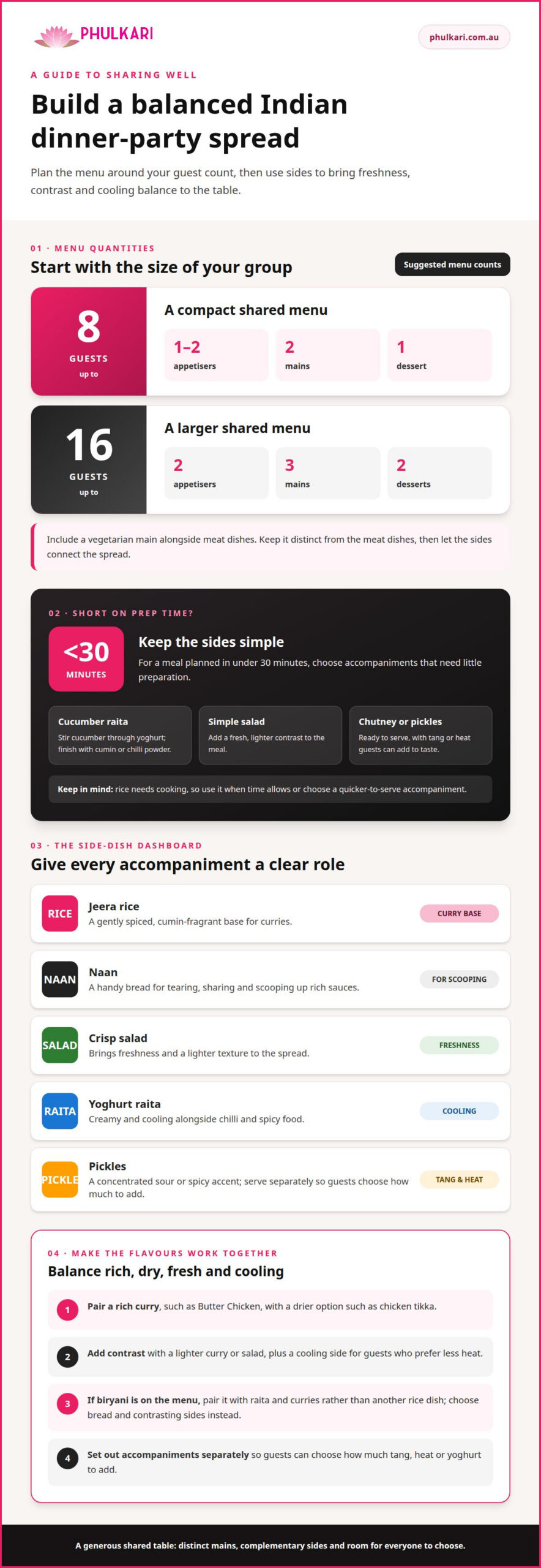
For a well-rounded spread, combine rice or naan with salad, raita and pickles. Jeera rice, fragrant with cumin, provides a gently spiced base for curries, while naan is handy for scooping up rich sauces. Crisp salad adds freshness, and yoghurt raita cools chilli. Pickles bring a tangy contrast that guests can add to taste.
For a meal planned in under 30 minutes, choose sides that need little preparation: cucumber raita, a simple salad, and ready-to-serve chutney or pickles. Raita comes together by stirring cucumber through yoghurt, then sprinkling cumin or chilli powder on top. Rice needs cooking, so use it when time allows or choose a quicker-to-serve accompaniment. The key is balancing preparation with the mains, not adding several elaborate dishes.
Chutney, pickles and raita each bring something different. Raita is creamy and cooling beside spicy food; pickles offer a concentrated sour or spicy accent. Chutney adds another flavour and can be served with bread or rice. Put them in separate bowls so guests can choose how much tang, heat or yoghurt to add. A fresh salad provides a lighter contrast.
For a cohesive spread, serve rice with one or two curries, then add naan, salad and a small selection of accompaniments. Biryani already includes rice, so pair it with raita and curries rather than another rice dish. Prepare dips and chutneys ahead where practical, leaving the bread warm and the salad fresh for serving. For a ready-made Indian meal to share, explore Indian dining options.
3. Balancing flavours and textures in a shared Indian meal
When planning Indian side dishes for a dinner party, consider how each accompaniment works with the mains. Pair a rich curry such as Butter Chicken with a drier option such as chicken tikka. Add a lighter curry or salad for textural variety, and offer a cooling side for guests who prefer less heat. Each dish then has a clear role.
Choose Indian side dishes for a dinner party that let guests build their own plates. Plan enough naan for everyone, with extra if you expect guests to use it for scooping. Adjust rice and other sides to suit the mains and the rest of the spread. If biryani is on the menu, avoid adding several more rice dishes; choose bread and contrasting sides instead.
For groups of up to eight, a suggested menu includes one to two appetisers, two mains and one dessert. For a group of up to 16, plan for two appetisers, three mains and two desserts. Within either menu, include a vegetarian main alongside meat dishes, then use sides to bring the flavours together. Guests can choose what suits their appetite and preferences.
Consider the meal’s progression as well as the plate. Serve entrées for sharing before the mains, then keep the sides within easy reach throughout the meal. A contrast between smoky, drier textures and mellow, saucy curries makes each combination feel distinct. Finish with dessert for a satisfying close.
Phulkari Indian Balgowlah
Phulkari Indian in Balgowlah makes it easy to bring Indian flavours to a shared meal, with curries and breads for the table. Choose Butter Chicken or Lamb Rogan Josh for a rich, saucy centrepiece, or Goan Fish Curry for a seafood option. Garlic Naan gives guests bread to tear and share alongside the curries.
For a dinner party, consider how each dish fits the spread: pair a curry with rice and cooling sides, then add naan for scooping up the sauce. A mix of mains and accompaniments gives guests room to build a plate that suits them. Phulkari Indian in Balgowlah brings these flavours together for a shared meal.
Contact Phulkari Indian Balgowlah to discuss your meal.
Make your next shared meal memorable
Make the table feel generous without overcomplicating the menu. Thoughtful Indian side dishes for a dinner party let you cater to different appetites and preferences while keeping sharing at the centre. Choose a spread that feels manageable to serve, and give guests room to discover combinations at their own pace.
Hosting is about more than what’s on each plate. It’s the warmth of passing dishes, the conversation around the table and the moment someone finds a favourite pairing. Keep the plan simple and enjoy the evening alongside your guests. A welcoming, flavourful table doesn’t need to be perfect.
Frequently Asked Questions
What is an Indian Side Dish?
An Indian side dish is a smaller accompaniment that adds flavour, texture or contrast to a meal. It might be a vegetable dish, yoghurt-based raita, rice, bread or a condiment such as pickle. A drier vegetable dish can add bite beside a saucy curry, while sharp pickle lets diners adjust each mouthful.
Which Indian side dishes pair well with vegetarian and meat main courses?
Rice, naan, salad and raita can accompany vegetarian and meat mains alike. Try a dry vegetable dish beside a lentil curry, or cucumber raita with chicken tikka. For a shared spread, offer saucy and drier dishes, then let guests choose their combinations. Keep paneer and yoghurt-based sides separate from plant-based options for vegan diners.
What are easy Indian side dishes to make ahead for a dinner party?
Chutneys and dips can be prepared two to three days ahead, while party sides can be made four to five hours before serving and refrigerated. Set out chutney and pickles shortly before guests arrive, and prepare salad closer to mealtime so it stays fresh. Keep rice and bread for nearer serving time, so their texture and warmth complement the rest of the meal.
Which Indian rice dishes are suitable as dinner party sides?
Jeera rice, pulao and chitrana each bring a distinct character to the table. Jeera rice has a cumin fragrance; pulao can include spices, cashews and garlic. Chitrana is a South Indian-style rice dish made with lemon and peanuts. If biryani is already the main rice dish, pair it with raita and curries rather than adding another rice preparation.
What Indian breads are best served with curries at a dinner party?
Naan suits rich, saucy curries because its soft, substantial texture makes scooping up sauce easy. Roti is a lighter bread option, while paratha adds another flatbread choice. Serve breads warm alongside the curries, with rice for guests who prefer it. For a mixed table, choosing one bread style keeps the accompaniments simple.


