
Yes, curry can be rich and aromatic without cream. Lentil and bean curries, tomato-based dishes and simple sides may be dairy-free, but recipes vary: butter, ghee, yoghurt and cheese can appear even when cream doesn’t. For dairy-free Indian dishes in Sydney, knowing what goes into a dish matters as much as its name.
It’s understandable to pause when a menu says vegetarian but not dairy-free. This guide explains which Indian dishes may be dairy-free by nature, how lentil and bean curries are prepared, and which ingredients to ask about at Sydney restaurants. You’ll also learn why naan, tandoori marinades, biryani and familiar creamy curries need closer attention. By distinguishing dairy-free from simply vegetarian, you can make a more informed choice and enjoy the spice, fragrance and warmth of your meal.
Key Takeaways
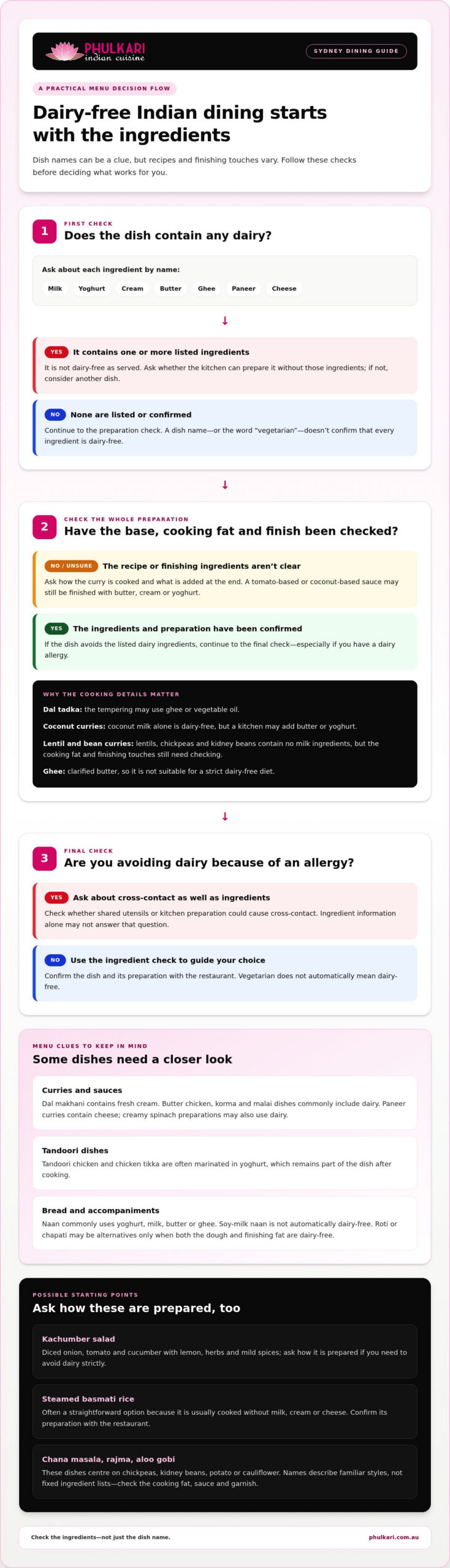
- Kachumber salad and steamed basmati rice are often straightforward choices; ask how each is prepared if you need to avoid dairy strictly.
- Dal tadka can be finished with ghee or vegetable oil, while coconut-based curries may also include butter or yoghurt.
- Roti or chapati may work instead of naan when both the dough and finishing fat are dairy-free.
- When ordering, name the ingredients to avoid, including milk, yoghurt, cream, butter, ghee, paneer and cheese. If you have a dairy allergy, ask about kitchen cross-contact too.
What Indian dishes are dairy free by nature?
Some simple sides may be dairy-free by nature. Kachumber salad combines diced onion, tomato and cucumber with lemon, herbs and mild spices. Steamed basmati rice is often a straightforward option because it’s usually cooked without milk, cream or cheese. These fresh, fragrant choices can complement a meal without relying on dairy-rich sauces.
Dish names alone don’t reveal every ingredient. Dal makhani contains fresh cream, while butter chicken, korma and malai dishes commonly include dairy. Paneer curries contain cheese, and creamy spinach preparations may also use dairy. Tandoori chicken and chicken tikka are often marinated in yoghurt, which remains part of the dish after cooking. Even a tomato-based curry may have cream added to soften its acidity.
Bread deserves the same care. Naan recipes commonly use yoghurt, milk, butter or ghee, so ask about the dough and finishing fat. Ghee is clarified butter, so it isn’t suitable for a strict dairy-free diet. Soy-milk naan isn’t automatically dairy-free: the recipe may still include yoghurt, butter or ghee. Roti or chapati may be alternatives only if both the dough and finishing fat are dairy-free.
Be specific when ordering: ask whether the dish contains milk, yoghurt, cream, butter, ghee, paneer or cheese. Vegetarian doesn’t mean dairy-free, and dairy-free doesn’t mean vegetarian. If you have a dairy allergy, ask about shared utensils and kitchen cross-contact as well as ingredients. This distinction matters for salads, curries and every bread served alongside.
Naturally dairy-free lentil and bean curries
Lentils, chickpeas and kidney beans can form the base of hearty curries without dairy. Chana masala pairs chickpeas with tomato, onion and spices, while rajma features kidney beans in a richly seasoned sauce. The legumes themselves contain no milk ingredients, but the cooking fat and finishing touches shape the final dish. Dal tadka, for example, may be finished with ghee or vegetable oil, so the tempering determines whether it’s dairy-free.
Vegetable curries offer other possibilities. Aloo gobi combines potato and cauliflower with spices, while chana masala centres on chickpeas rather than cream. These names describe familiar styles, not fixed ingredient lists. A tomato sauce may be cooked with oil and finished with butter or cream in some kitchens. Ask whether the curry’s base and final garnish contain dairy.
Coconut-based sauces can bring a silky texture without cream and pair well with lentils, beans or vegetables. Coconut milk alone is dairy-free, but some kitchens finish coconut curries with butter or yoghurt. Ask about both the sauce and the finishing ingredients rather than relying on “coconut” in the dish description.
Plant-based British-Indian curries adapt familiar restaurant styles without animal-derived ingredients. A potato and vegetable curry can use oil, tomato and spices for body instead of butter or cream. For a clear order, name the curry and ask whether it’s cooked with ghee, butter, yoghurt, cream or cheese. That detail helps distinguish a genuinely dairy-free lentil or vegetable dish from one that only sounds plant-based.
Sydney restaurants with dairy-free options
Menus and preparation vary between Sydney restaurants, so check ingredients as well as dish names. For gluten-free and dairy-free dining, ask about each set of ingredients separately.
Dairy-Free Dining by Sydney Suburb
Sydney has Indian restaurants across its suburbs, including Balgowlah, Manly, Seaforth, Mosman, Dee Why, North Manly, Fairlight, Freshwater, Manly Vale, Queenscliff, St Ives, Frenchs Forest, Allambie Heights, North Sydney, Brookvale and Belrose. A suburb name alone won’t tell you whether a restaurant can prepare a suitable meal. Check the venue’s menu for curries, breads and sides, then ask how your chosen dish is made.
For gluten-free choices, ask whether a curry uses wheat flour as a thickener and whether its sauce is prepared separately from bread. Spinach curry can contain cream or other dairy, so ask about its ingredients, too. Gluten-free and dairy-free are separate requirements: a dish that avoids gluten may still contain yoghurt, butter or cream.
Dairy-Free Substitutions and Takeaway
Ask whether the kitchen can prepare a curry without milk, yoghurt, cream, butter, ghee, paneer or cheese. For gluten-free dining, request a suitable accompaniment instead of naan, and ask about wheat in the sauce. State both requirements clearly when ordering takeaway or delivery, so they’re understood as dietary needs, not preferences.
Takeaway and delivery options vary by Sydney restaurant. Use the venue’s own menu to identify available dishes, then give the same ingredient instructions when placing your order. For a dairy allergy, ask about utensils and kitchen cross-contact, not just the listed ingredients.
Phulkari Indian Balgowlah: Butter Chicken
Phulkari Indian serves Butter Chicken at its Balgowlah restaurant, a familiar, richly flavoured choice for diners who enjoy classic Indian curries. Butter chicken commonly contains dairy, so it isn’t automatically suitable for a dairy-free diet. If you’re avoiding dairy, ask about ingredients before choosing from the menu.
Phulkari Indian also serves Lamb Rogan Josh and Goan Fish Curry, with Garlic Naan available alongside. Dish names alone don’t establish whether a recipe is dairy-free, so consider your dietary needs when selecting a meal. If dairy isn’t a restriction, Butter Chicken offers a warming, creamy-style curry. For a dairy-free meal, ask about the ingredients in the dish you’re considering.
You’re welcome to contact Phulkari Indian Balgowlah or visit phulkari.com.au.
Make your next meal a thoughtful choice
When choosing dairy-free Indian dishes in Sydney, let your needs guide your order rather than assumptions about familiar names. A little care when reading the menu leaves room to enjoy fragrant spices, shared plates and a dish that suits your table.
Before deciding, be clear about whether you’re avoiding dairy by preference or managing an allergy, then explain that when ordering. At Phulkari Indian in Balgowlah, Butter Chicken, Lamb Rogan Josh and Garlic Naan offer familiar flavours to explore. Their names alone don’t establish whether they meet a dairy-free requirement, so keep your dietary needs central to your choice.
May your next Sydney meal bring a warm welcome and flavours worth lingering over.
Frequently Asked Questions
Can I have curry without cream?
Yes, curry can be made without cream, though the recipe may use other dairy. Butter, ghee, yoghurt, paneer and cheese can also appear in sauces or as finishing touches. Ask about the curry base and cooking fat, and specify every ingredient you’re avoiding. If you have an allergy, mention it clearly rather than requesting a preference-style adjustment.
What Indian dishes are naturally dairy-free?
Plain rice, fresh vegetable sides and pulse-based dishes can be good starting points, depending on how they’re prepared. Take care with dessert: gulab jamun, kulfi, rasmalai and kheer commonly contain milk or milk solids. When choosing a full meal, consider the main, accompaniment and sweet separately, as dairy may appear in just one part.
Which Sydney Indian restaurants offer dairy-free dishes?
For dairy-free Indian dishes in Sydney, choose based on the ingredients in a specific dish, not the restaurant’s cuisine label. Phulkari Indian serves Indian food, but a dish name alone doesn’t establish whether its recipe is dairy-free. Tell the restaurant which ingredients you avoid, then ask about the sauce, cooking fat and garnish before ordering.
Which Sydney Indian restaurants have clearly labelled dairy-free menus?
Look for an explicit dairy-free label rather than relying on a gluten-free mark. Phulkari Indian’s menu uses “GF” to identify gluten-free dishes; that label doesn’t mean dairy-free. If the menu doesn’t state that a dish is dairy-free, check its ingredient description and ask whether it contains milk, cream, butter, ghee or yoghurt.
Where can I find dairy-free Indian food in Sydney CBD?
Masala Kitchen is listed as an Indian restaurant in World Square, Pitt Street, Sydney NSW 2000. For a dairy-free order, name the ingredients you’re avoiding and ask about the curry base, cooking fat and accompanying sides. If you’re managing an allergy, include questions about shared utensils and kitchen cross-contact when discussing your meal.


