
A beautiful menu isn’t automatically the right menu for your wedding. Knowing how to choose a caterer for your wedding means finding a team whose food and service suit the atmosphere you want and the practical needs of your guests.
It’s natural to focus on dishes that sound delicious, but unclear answers about dietary needs or a menu that doesn’t match your vision are reasons to ask more questions. A tasting lets you experience the food and discuss how your preferences could shape the menu.
This guide explains how to use tastings, communicate guests’ dietary requirements and assess whether a caterer understands your plans. Use these points to weigh the details, raise concerns early and choose food that feels right for your celebration.
Key Takeaways
- Use a tasting to assess flavour, presentation and portion sizes, and notice how the caterer responds to your preferences.
- Share guests’ dietary requirements early so suitable menu alternatives and safe food handling can be discussed.
- Look for a caterer whose culinary style and approach fit the atmosphere you want your wedding to have.
- Bring your priorities into the conversation to help shape a menu that feels considered and welcoming to your guests.
1. Food tastings
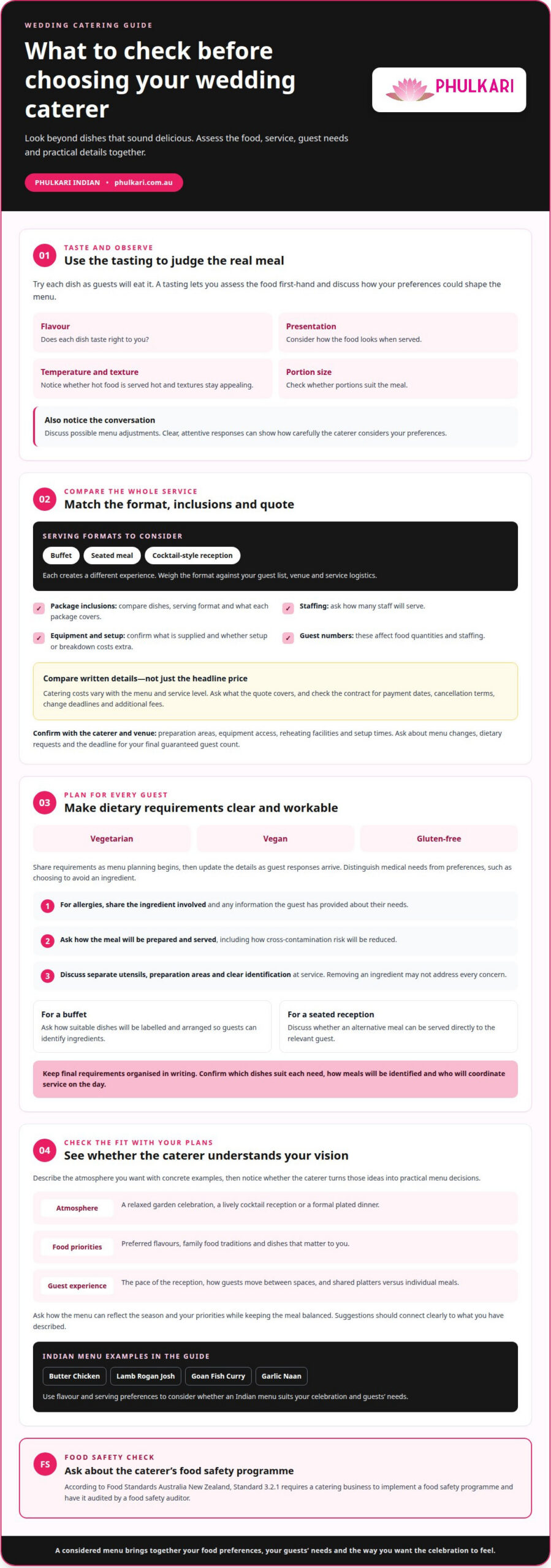
Before booking, read recent reviews for comments on food quality, timing and communication. Ask for references from couples whose weddings had a similar reception style. At a tasting, judge flavour, presentation and portion sizes for yourself instead of relying only on photographs or menu descriptions.
At the tasting, try each dish as guests will eat it. Notice whether hot food is served hot, the textures remain appealing and the portions suit the meal. Discuss possible menu adjustments and see how clearly the caterer responds. Their attention to your requests can show how carefully they’ll consider your preferences on the day.
Compare the dishes, serving format and package inclusions side by side. A buffet, seated meal or cocktail-style reception creates a different experience, so consider your guest list, venue and service logistics. Catering costs vary with the menu and service level, so compare what each package includes as well as its price.
Guest numbers affect food quantities and staffing, while equipment, setup and service fees can change the total. Ask what the quote covers, how many staff will serve, what equipment is supplied, and whether setup or breakdown costs extra. Compare the written details, not just the headline price.
Before booking, ask about menu changes, dietary requests, staffing and the deadline for your final guaranteed guest count. The contract should set out payment dates, cancellation terms, change deadlines and additional fees. Confirm preparation areas, equipment access, reheating facilities and setup times with the caterer and venue.
According to Food Standards Australia New Zealand, Standard 3.2.1 requires a catering business to implement a food safety program and have it audited by a food safety auditor.
2. Do I tell the caterer about guest dietary requirements?
Yes. Share dietary requirements as soon as you start planning the menu, then update the details as guest responses arrive. A clear list helps the caterer consider suitable options for vegetarian, vegan and gluten-free guests, as well as guests with allergies. Distinguish medical needs from preferences, such as choosing to avoid a particular ingredient.
For each allergy, provide the ingredient involved and any information the guest has shared about their needs. Ask how the caterer will prepare and serve that meal, and how they’ll reduce the risk of cross-contamination. Discuss separate utensils, preparation areas and clear identification at service. Don’t assume that removing an ingredient addresses every concern.
A customised menu can help guests feel considered without making the meal feel fragmented. For a buffet, ask how suitable dishes will be labelled and arranged, and how guests can identify ingredients. For a seated reception, discuss whether an alternative meal can be served directly to the relevant guest. Dietary meals should feel like part of the celebration, not an afterthought.
Keep the final requirements organised in writing and share changes promptly. Confirm which dishes suit each need, how meals will be identified and who will coordinate service on the day. If a guest has an allergy, ask them to communicate their requirements clearly through you, so the details reach the caterer before the event.
Thoughtful planning starts with an open conversation about guests’ needs. You can discuss your guests’ needs as you shape a menu for the celebration.
3. Choosing a caterer who understands your vision
For a Sydney wedding, choose a caterer whose food suits your vision, guest experience and venue. They should listen to your priorities, explain how the dishes could fit the occasion and respond thoughtfully to dietary requirements.
Describe the atmosphere you want with concrete examples: a relaxed garden celebration, a lively cocktail reception or a formal plated dinner. Share preferred flavours, family food traditions and any dishes that matter to you. These details tell the caterer more than a colour palette or mood board can.
Notice how the conversation develops. A suitable caterer will ask about the pace of the reception, how guests will move between spaces and whether you prefer shared platters or individual meals. They should explain how menu choices affect the flow of the meal, rather than simply presenting a fixed selection.
Ask how the menu can reflect the season and your priorities without losing balance. For example, if you want a generous, informal feel, discuss dishes designed for sharing. If an elegant dinner is central to your vision, talk through presentation, portion and the sequence of courses. The caterer’s suggestions should connect clearly to what you’ve described.
For couples deciding how to choose a caterer for their wedding, a clear sign of alignment is a conversation that turns ideas into practical menu decisions. Choose a caterer who can explain what they’ll prepare, how it suits your celebration and how the plan can accommodate your guests.
Phulkari Indian Balgowlah
Phulkari Indian Balgowlah can help bring Indian flavours to your wedding table through its catering packages. If you’re considering a menu with distinctive spices and generous, comforting dishes, examples include Butter Chicken, Lamb Rogan Josh, Goan Fish Curry and Garlic Naan. These choices can help you decide whether an Indian menu suits the atmosphere you have in mind and the experience you want to share with guests. As you shape your plans, consider how the menu’s flavours fit your celebration and guests’ needs. Contact Phulkari Indian Balgowlah to discuss your wedding catering.
Shape a celebration that feels like yours
Your menu can do more than feed your guests. It can express the welcome, character and sense of occasion you want them to remember. As you decide how to choose a caterer for your wedding, look for a match between your vision and the experience the food will create around the table.
Let your priorities guide the next conversation. Whether you’re shaping a menu around shared traditions or looking for distinctive flavours, a thoughtful discussion can help turn your ideas into a warm, personal celebration.
May your wedding table bring everyone together in a way that feels truly yours.
Frequently Asked Questions
What are the most common red flags when choosing a wedding caterer?
Watch for unclear answers, details that change between conversations or reluctance to put agreed arrangements in writing. A caterer who dismisses questions about guests’ needs or avoids discussing how service fits your venue may not be the right match. In Sydney, look for communication that stays considered and organised as your plans evolve.
Can I try the food before I decide?
Yes, ask about tasting options before making your decision. Arrangements vary: some caterers offer tastings before booking, while others require a booking first or charge a tasting fee. Wedding expos and similar events can also offer a chance to sample dishes. Clarify what the tasting includes so you know which menu choices you’ll experience.
Do I need to tell the caterer about guest allergies or special diets?
Yes, tell the caterer as early as possible, and distinguish allergies from preferences such as vegetarian or vegan choices. For example, explain that a guest has a peanut allergy rather than simply saying they avoid nuts. Ask how the meal will be identified at service, and encourage guests with specific concerns to share clear details through you.
How far in advance should I book my wedding caterer?
Book your caterer early, particularly if your date falls during a popular season. Explore caterers early, then narrow your shortlist as venue details settle. Earlier planning gives you more time to align the menu with your reception plans.
How should I evaluate a wedding catering tasting checklist?
Use the checklist to record specific observations, not just a general impression. Note which dishes you sampled, how each tasted as it cooled and whether the presentation suited your reception style. Write down questions about serving and menu adjustments, then compare your notes with the written proposal. This makes your final decision easier to explain to anyone sharing it.


