
Pizza isn’t automatically the easiest choice for an office lunch. Indian catering vs pizza for office lunch comes down to your team: pizza suits a simple, familiar meal, while Indian dishes offer more variety and can include vegetarian, vegan, gluten-free and dairy-free options. The best spread is one that gives colleagues choice without making lunch complicated.
It’s understandable to favour food that’s easy to share and enjoyable for a mixed group. This guide compares the two options, explains how to accommodate different spice preferences and dietary needs, and explores Indian catering ideas for Australian workplaces. You’ll come away with a clearer sense of which lunch fits your team, the occasion and the way you want people to gather around the table.
Key Takeaways
- Match the lunch to the occasion: consider whether your team needs a quick, familiar meal or a more varied shared spread.
- Different spice preferences don’t have to rule out Indian food; heat can be adjusted for a workplace meal.
- Plan for dietary needs with clearly labelled choices, and consider individual meals when colleagues need different options.
- Explore how Indian catering packages featuring dishes such as Butter Chicken, Lamb Rogan Josh and Garlic Naan could suit your team.
Is Indian food suitable for employees who don’t like spicy meals?
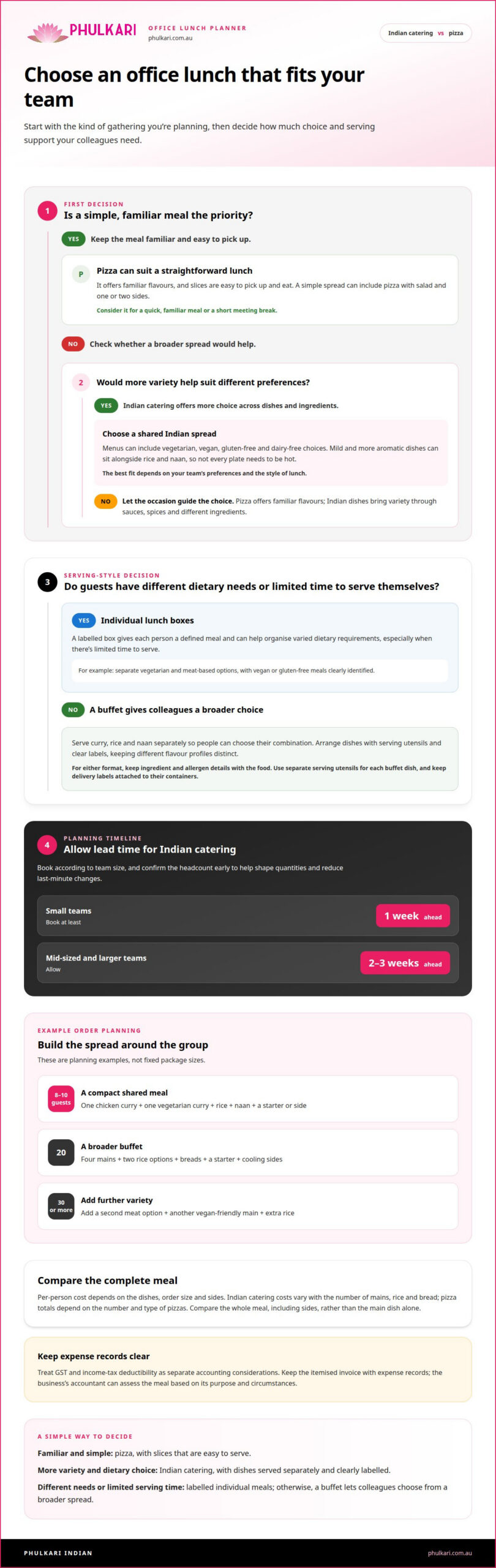
Yes. Indian food can suit a corporate lunch even when some colleagues prefer gentle flavours. Caterers can adjust heat, oil and portion sizes for professional settings. For example, a mild butter-based curry can sit alongside a more aromatic dish, rice and naan. That gives employees a choice without making every plate hot. Pizza offers familiar flavours, while Indian dishes bring variety through sauces, spices and different ingredients. The better fit depends on your team’s preferences and the style of lunch.
Delivery and buffet service can work for both options. Serve curry, rice and naan separately so colleagues can choose their combination; pizza slices are easy to pick up and eat. For a buffet, arrange dishes with serving utensils and clear labels, keeping different flavour profiles distinct. That helps employees identify what suits them before filling a plate.
For meetings, choose a practical spread that’s easy to serve and eat during a short break. Pizza with salad and one or two sides can suit a longer workshop or training session. A casual team lunch or workplace celebration may call for more choice, such as antipasto platters, salads, pasta, seafood or gourmet finger foods alongside pizza. Tailored corporate catering menus can also balance milder dishes with bolder flavour, depending on the event and attendees.
For Australian workplace orders, treat GST and income-tax deductibility as separate accounting considerations. Keep the itemised invoice with the expense records, and have the business’s accountant assess how the meal is treated based on its purpose and circumstances. This is especially useful when planning recurring meetings or a larger corporate celebration, where clear records help keep food expenses organised.
Dietary requirements and allergen handling
A satisfying workplace spread starts with the dietary preferences people need accommodated. Indian catering menus can include vegetarian, vegan, gluten-free and dairy-free choices, with clear labels to help colleagues choose. Pizza may feel familiar, but toppings and bases can limit suitable combinations for some guests. A mixed buffet gives the team more choice, provided each dish is easy to identify.
For an Australian catered office lunch, label dishes clearly with their names, ingredients and relevant allergen information. Keep ingredient details alongside buffet dishes and individual meals, so employees can make an informed choice. Separate serving utensils for each dish can help prevent mix-ups as colleagues serve themselves. For delivery, keep labels with the food rather than separating them from their containers.
Individual lunch boxes can suit corporate events where attendees have different needs or limited time to serve themselves. A labelled box gives each person a defined meal, while a buffet lets colleagues select from a broader spread. For example, a team could have separate vegetarian and meat-based options, with vegan or gluten-free meals identified clearly. The format should match the workplace, the event and the dietary details provided for the order.
These practical details matter as much as familiar flavours. For a shared buffet, clear labels and distinct serving utensils make choices easier; for delivery, labels should remain attached to each meal. Explore catering options for workplace lunches when planning a spread around varied preferences.
Indian catering options for Australian office lunches
Indian catering can suit both smaller team meals and larger office gatherings. The menu, dietary requirements and serving style all help determine what works best.
Catering and pizza costs
Per-person cost depends on the dishes, order size and sides chosen. For Indian catering, a spread with several mains, rice and bread differs from a simpler menu; pizza totals depend on the number and type of pizzas ordered. Compare the complete meal, including sides, rather than judging by the main dish alone. This helps match the menu to your event and budget.
Delivery fees, minimum orders and lead times
Delivery fees and minimum orders depend on the order and delivery arrangements, while lead time affects planning. Small teams should book Indian catering at least one week ahead; mid-sized and larger teams should allow two to three weeks. Confirming the headcount early helps shape quantities and reduce last-minute changes for office events.
For eight to ten guests, a suggested order includes one chicken curry, one vegetarian curry, rice, naan and a starter or side. For 20, a sample spread includes four mains, two rice options, breads, a starter and cooling sides. A group of 30 or more can add a second meat option, another vegan-friendly main and extra rice. These are planning examples, not fixed package sizes.
Give thought to how guests will gather and serve themselves. Buffet dishes let colleagues build plates to suit their preferences, while individually packed meals can help organise varied dietary requirements. Include substantial vegetarian choices, and identify gluten-free options clearly. Indian fusion finger foods or platters can also suit mingling at office events.
Phulkari Indian Balgowlah: Catering Packages
Phulkari Indian offers catering packages for teams in Sydney, including Balgowlah, choosing a shared Indian meal over a familiar pizza lunch. They’re a natural option for workplace gatherings where colleagues can enjoy a selection of dishes together. Butter Chicken and Lamb Rogan Josh bring distinct flavours to the spread, with Garlic Naan alongside.
Consider Phulkari Indian catering when your team wants more variety at the table, whether for a meeting, team lunch or office celebration. Butter Chicken, Lamb Rogan Josh and Garlic Naan offer a starting point for planning a shared spread around Indian favourites. Your choice between Indian catering and pizza depends on the occasion and the kind of meal your team will enjoy.
Contact Phulkari Indian to discuss catering packages for your office lunch in Sydney.
Make your next office lunch a shared occasion
Let the next lunch reflect the kind of gathering you want to create. Choosing Indian catering or pizza for an office lunch is a chance to make a familiar team ritual feel more considered, with shared dishes that invite colleagues to pause, connect and enjoy the meal together.
For a flavourful spread, Butter Chicken and Lamb Rogan Josh bring distinct character, while Garlic Naan completes the meal. Choose a style that suits your team and occasion, then make lunch a welcome moment in the working day.
May your next team lunch bring good food, easy conversation and a little warmth to the day.
Frequently Asked Questions
What Makes a Corporate Lunch Actually Work?
A corporate lunch works when the food suits the schedule, setting and way people gather. For a meeting with limited time, choose dishes that are easy to serve without interrupting conversation. For a longer team event, a relaxed buffet can make lunch feel more social. A clear layout, serving utensils and nearby rubbish bins also help keep the room comfortable.
How do you handle dietary requirements like gluten-free or nut allergies?
Share each dietary requirement clearly when arranging the food, including whether it’s an allergy or preference. Ask for ingredient details and keep labels with each dish. For a nut allergy, don’t assume a dish is safe because nuts aren’t visible; cross-contact can occur during preparation or serving. Separate utensils and individually packed meals can help distinguish suitable choices.
Is pizza suitable for office catering?
Yes, pizza can suit office catering, especially when colleagues need an easy-to-handle meal during a short break. Slices are simple to distribute, and different toppings can offer some choice. For a workshop or planning session, add a side dish to make the spread feel more complete. When attendees have different dietary needs, check whether the available pizza options suit them.
What types of Indian dishes are best for an office lunch?
Biryanis, dry curries and assorted breads can work well for an office lunch, offering flavour without making every dish heavily sauced. For a buffet, pair a rice-based dish with a curry and bread so guests can build a plate to suit their appetite. A fish curry, such as Goan Fish Curry, can add another flavour to the menu.
What dietary options do Indian caterers and pizza restaurants offer, including vegetarian, vegan, gluten-free and halal?
Indian and pizza menus may offer vegetarian, vegan and gluten-free choices, but suitability depends on each dish’s ingredients and preparation. Dairy-free options may also be available. Halal choices vary between restaurants, so don’t assume a dish meets halal requirements based on its name. Look for clear information about ingredients and halal status when selecting meals for guests.


