
The cut on the plate changes the experience. The difference between chicken tikka and tandoori chicken is mainly the cut: tikka is boneless chicken cut into pieces, while tandoori chicken is commonly cooked in larger, bone-in pieces. Both are marinated with yoghurt and spices and cooked at high heat, but their shape and presentation give each dish a distinct place at the table.
That distinction can be easy to miss when both arrive fragrant with warming spices and smoky edges. If you’re choosing between skewered pieces and a more substantial bone-in serving, the cut is a useful guide. This article explains how the chicken is prepared and presented, what that means when you order, and which style may suit your meal. You’ll have a clearer idea of what to expect before the first bite.
Key Takeaways
- Use the cut as your first guide: tikka is typically boneless, while tandoori chicken is served on the bone.
- A clay tandoor gives both styles their characteristic high-heat cooking, but the cut shapes how each is presented.
- Choose tikka for convenient, bite-sized pieces, or tandoori chicken when you’d prefer a more substantial bone-in serving.
- If chicken tikka suits your meal, Phulkari Indian Balgowlah offers it on the menu.
Chicken Tikka Vs Tandoori: What’s The Difference?
Both styles use yoghurt, spices and high heat, but the cut and cooking method shape what arrives on your plate.
Tandoor and tandoori-style cooking
A tandoor is a clay oven that cooks food with intense heat; according to SBS, tandoori chicken is coated in yoghurt and spices, skewered and cooked in one. Tikka is usually boneless chicken cooked on skewers, while bone-in tandoori chicken takes longer. At home, cook chicken skewers under the grill for 15-20 minutes, turning them as they cook. A tandoori-style recipe can also use an oven at 200°C for 20 minutes, then finish under the grill for 5 minutes, or an air fryer at 190°C for 12 minutes.
Colour differences
Tandoori chicken often gets its vivid red colour from Kashmiri red chilli powder in the marinade. Chicken tikka’s colour comes from its own spice mixture, which can include chilli, cumin and garam masala; high heat adds browned edges. Recipes vary, so colour alone isn’t a reliable way to identify the cut or cooking method.
How are they cooked differently? Tikka is cut into boneless pieces and cooked quickly on skewers over high heat. Tandoori chicken is generally cooked as larger, bone-in pieces in a tandoor.
How do calories and nutrition compare? There’s no single comparison: the cut, portion, skin and marinade all affect the nutrition of either dish. Tomato-based tikka masala is a separate preparation, with chicken tikka pieces simmered in gravy.
| Option | Cut | Typical cooking | Colour cue |
|---|---|---|---|
| Chicken tikka | Boneless pieces | Skewers; grill or tandoor | Spices and browning |
| Tandoori chicken | Often bone-in | Tandoor; oven or air fryer at home | Kashmiri chilli may give a red hue |
Choose tikka for quick-cooking boneless pieces, or tandoori chicken for a classic bone-in serving.
Differences in chicken cuts and presentation
Chicken tikka starts with boneless chicken cut into bite-sized pieces, often from the breast or thigh. “Tikka” means pieces, and their even size makes them easy to thread onto skewers. The marinade coats each surface, bringing yoghurt, ginger and spices into every bite. The cooked pieces are usually served separately rather than as one large portion.
Tandoori chicken is prepared in larger cuts, such as legs, thighs or breasts, and the meat is scored so the marinade can reach beyond the surface. The bone stays in the cut, giving the serving a more substantial, rustic presentation. On a plate, a tandoori leg or thigh feels like a main-course portion; tikka pieces are easier to share or enjoy as a starter.
The accompaniments can reinforce that difference. Tikka is often served with mint chutney for dipping, which suits its small, skewer-ready pieces. Tandoori chicken may arrive with cucumber raita, lemon and salad, so diners can pair each larger bite with something cool or fresh. At an Indian restaurant, these sides can help signal whether a dish is suited to nibbling or a fuller meal.
There’s room for variation: breast gives tikka a leaner, firmer bite, while thigh pieces tend to feel richer. A clay oven can cook either style, but the cut still determines how it is portioned and served. For a skewer-friendly option, explore chicken tikka as you decide which presentation suits your meal.
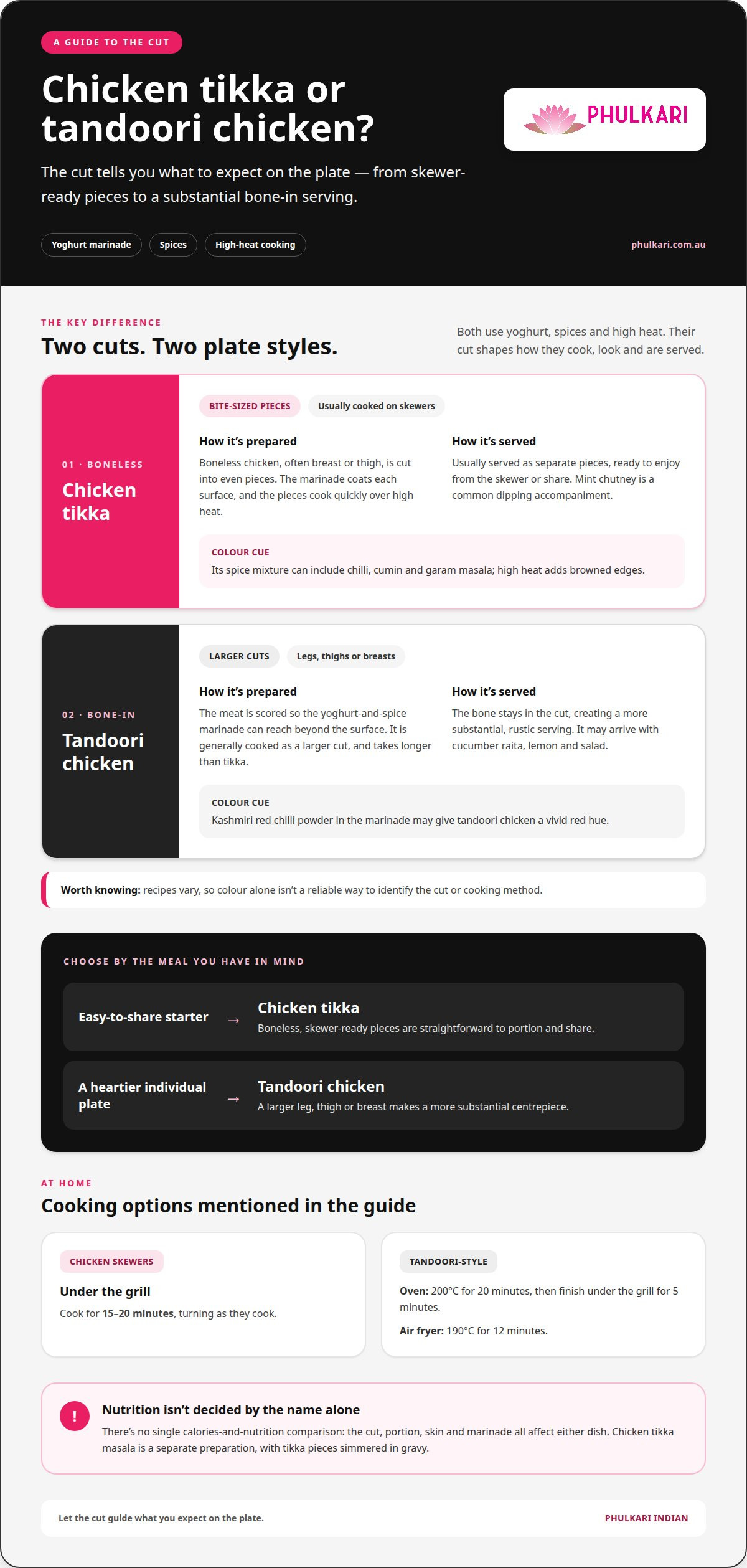
How chicken tikka differs from tandoori chicken by cut
The key distinction is whether the chicken is cut into portions before cooking. Chicken tikka uses boneless pieces, while tandoori chicken is commonly prepared from bone-in legs, thighs or breasts. Tikka’s smaller pieces expose more surface to yoghurt, ginger, pepper and other spices. Tandoori cuts are scored to help the marinade reach into the meat, while the bone stays in place during cooking.
The bone can help retain juiciness as tandoori chicken cooks. By contrast, evenly sized tikka pieces cook quickly and are easy to thread onto skewers. That shape makes tikka straightforward to portion, while a leg or thigh creates a more substantial centrepiece. The cut, rather than the shared Indian spice tradition, gives each dish its distinct format.
Preparation also affects how the chicken is served after grilling. Chicken tikka can be served straight from the skewer, or the grilled pieces can be added to chicken tikka masala. In that separate dish, the pieces simmer in tomato-and-cream gravy for a creamy finish. Bone-in tandoori chicken is generally served as a whole cut, with its charred exterior and meat still attached to the bone.
For an easy-to-share starter, choose boneless tikka pieces; for a heartier plate, a bone-in tandoori cut is a natural fit. The ingredients may include similar yoghurt and spices, but the cut indicates how the dish will be portioned and eaten. Chicken tikka suits skewers and sharing, while tandoori chicken suits diners who prefer a larger individual piece.
Phulkari Indian Balgowlah: Chicken tikka
Phulkari Indian Balgowlah serves chicken tikka for diners drawn to the boneless, bite-sized style. It’s a natural choice when you’d like spice-marinated chicken in easy-to-enjoy pieces rather than a bone-in cut. For a broader meal, Butter Chicken and Lamb Rogan Josh offer other ways to enjoy Indian flavours, while tandoori lamb cutlets bring a tandoori-style option to the table.
Let the cut and presentation guide your choice: chicken tikka suits those who prefer convenient pieces, while a larger cut makes a heartier serving. To enjoy these dishes with your meal, dine in or order takeaway from Phulkari Indian Balgowlah.
Make your next meal a little more personal
Let the difference between chicken tikka and tandoori chicken help shape your meal. Think about the kind of occasion you have in mind: a relaxed dinner, a table of shared dishes or a chance to explore Indian flavours alongside familiar favourites. Your choice can set the tone for the meal.
At Phulkari Indian Balgowlah, enjoy chicken tikka alongside Butter Chicken, Lamb Rogan Josh and Garlic Naan. Choose a favourite as your starting point, then build a meal around the flavours and dishes you feel like sharing. Let your appetite lead.
May your next meal bring good food, warm company and something delicious to look forward to.
Frequently Asked Questions
What does tikka mean?
Tikka means chunks or pieces, describing how the meat is prepared rather than naming a particular spice blend. On a menu, the word usually signals marinated pieces cooked individually, often on skewers. That clue can help you picture how the dish will be served before ordering, especially if you’re choosing between a curry and a grilled starter.
Which Should You Order?
To understand the difference between chicken tikka and tandoori chicken, consider how you’d like to eat: tikka suits a shared meal, while a bone-in tandoori cut makes a more substantial individual serve. If you’re planning a Sydney dinner with several dishes, decide whether you’d prefer easy-to-share pieces or a larger cut as your main.
What is chicken tikka?
Chicken tikka is marinated chicken cooked as individual pieces, commonly served grilled rather than in sauce. Knowing the difference between chicken tikka and tandoori chicken also helps distinguish tikka from chicken tikka masala: the latter simmers grilled pieces in tomato-and-cream gravy. Ordering tikka on its own doesn’t mean you’re ordering the sauced curry.
What marinades and spices are used for chicken tikka versus tandoori chicken?
Both marinades commonly use yoghurt, ginger-garlic paste and warming spices, with seasonings adjusted to suit the cut and cooking method. Chicken tikka may include lemon juice, cumin, garam masala, chaat masala and dried fenugreek leaves. Tandoori chicken often features Kashmiri red chilli, coriander, turmeric and black pepper, giving its marinade a different balance of warmth and colour.
Which cuts of chicken are typically used for tikka and tandoori chicken?
Chicken tikka is usually made with boneless breast or thigh, cut into pieces that can be threaded onto skewers. Tandoori chicken is generally prepared from bone-in cuts such as legs or thighs, though breast pieces are also used. For sharing, boneless pieces are easy to portion; a leg or thigh makes a more individual serve.


