
A generous Indian buffet needs more than a table of beautiful dishes; it needs a layout that lets guests move, choose and serve themselves with ease. Knowing how to set up an Indian buffet at home starts with planning space around each dish, arranging food in a natural serving order and positioning drinks or desserts away from the busiest part of the line. A professional caterer also considers dietary labels, separate utensils and how hot and cold dishes will be kept at safe temperatures.
It’s easy to focus on the menu and overlook the flow, but well-planned stations help everyone enjoy a more relaxed meal. This guide explains how to arrange the serving area, where to place dishes and how to make dietary choices clear. You’ll also find practical ways to maintain food quality during service, so guests can enjoy each dish as intended.
Key Takeaways
- Use suitable warming equipment for hot dishes and keep cold selections chilled throughout service.
- Label dishes clearly and give each item its own serving utensil to make dietary choices easier to navigate.
- Position the buffet, drinks and desserts to keep guests moving comfortably and reduce queues.
- Plan dish placement and replenishment together so the spread stays inviting as guests serve themselves.
How professional caterers keep hot and cold food at safe temperatures
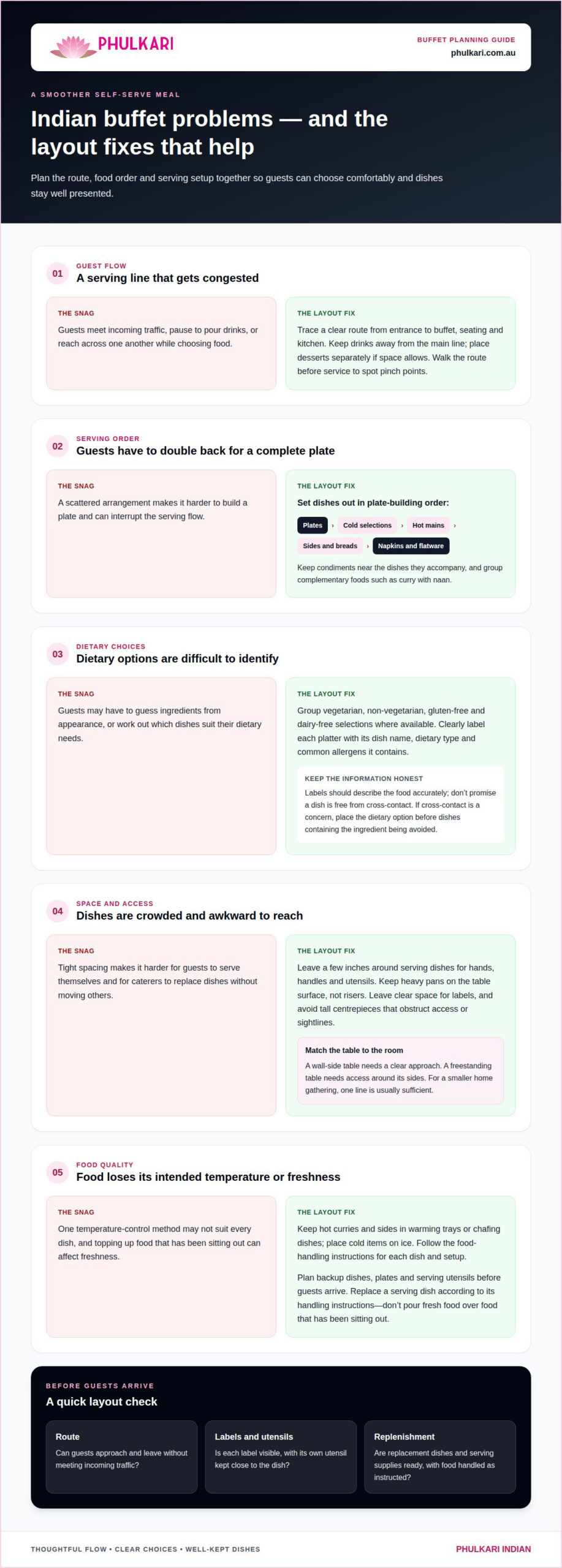
- Match each dish to suitable temperature control. Keep hot curries and sides in warming trays or chafing dishes, and place cold items on ice. Caterers follow the food-handling instructions for each dish and serving setup, rather than assuming one method suits every item.
- Arrange the line in plate-building order. Set plates first, then salads or other cold selections, hot mains, sides and breads. Put condiments near the dishes they accompany, with napkins and flatware at the end. Group complementary foods, such as curry with naan, so guests can build a balanced plate.
- Choose the menu size around the gathering. A caterer considers the guest count, meal style, dietary needs and variety of courses before deciding how many Indian dishes to serve. For beginners, familiar choices such as Butter Chicken, Lamb Rogan Josh and Garlic Naan offer recognisable flavours alongside a spread of textures.
- Estimate portions from the whole menu. The amount to prepare per person depends on the guest count, serving duration, dish portions and how many mains and sides share the meal. A caterer plans quantities across the menu, rather than treating every dish as a full meal for every guest.
- Replenish in fresh batches. Plan backup dishes and supplies, including plates and serving utensils, before guests arrive. Replace a serving dish according to its handling instructions; don’t pour fresh food over food that has been sitting out. This keeps the buffet orderly while protecting the freshness of each dish.
How Do Professional Caterers Arrange Dietary Options?
- Map the dietary choices before setting the table. Caterers group vegetarian, non-vegetarian, gluten-free and dairy-free selections where the menu provides them. This makes the spread easier to scan before guests begin serving. They place allergy-conscious options in a clearly labelled area, rather than relying on guests to infer ingredients from a dish’s appearance.
- Give every dish its own serving setup. Match each menu item with a serving dish or tray and a dedicated utensil. Keep the utensil close to its dish, so guests can serve themselves without reaching across other food. Separate utensils also help prevent one spoon from travelling between dishes.
- Label each platter with useful detail. Include the dish name and identify whether it is vegetarian or non-vegetarian, along with common allergens it contains. Clear wording helps guests make informed choices. Labels should describe the food accurately, not promise that a dish is free from cross-contact.
- Position dietary selections thoughtfully. If cross-contact is a concern, place a dietary option before dishes containing the ingredient being avoided. Keep its label and utensil with it. A simple written layout, even notes on platters during setup, helps caterers put each dish in its intended position.
- Keep labels visible among the decorations. Leave clear space beside each serving dish, and avoid tall centrepieces that obstruct labels or access. Use restrained decorations that don’t crowd the food. If you’re considering a catered spread, browse Indian menu inspiration while planning how dietary choices will be presented.
How Professional Caterers Plan Buffet Station Locations
- Trace the route guests will take. Before placing tables, a caterer considers the entrance, dining area, kitchen access and seating. A clear route lets guests reach the buffet and move away without crossing paths with someone carrying food. This room plan is the starting point for deciding how to set up an Indian buffet at home.
- Fit the table to the room. A table against a wall needs a clear approach for the serving line; a freestanding table needs access around its sides. For a smaller home gathering, one line is usually sufficient. The caterer considers the room’s shape and guest movement before choosing the arrangement.
- Allow working space around each dish. Leave a few inches around serving dishes so guests can reach them and caterers can replace them without shifting neighbouring items. Keep heavy pans on the table surface, not risers. This also leaves space for handles and serving utensils.
- Move pause points away from the food line. Set drinks apart from the main buffet so guests pouring a beverage don’t hold up diners choosing food. If space allows, place desserts separately too. A designated spot for used plates, cups and napkins helps keep the serving area clear.
- Walk through the layout before service. Test the route from the entrance to the buffet, seating and kitchen. Check that guests can approach and leave without meeting incoming traffic. For anyone deciding how to set up an Indian buffet at home, this simple walkthrough reveals pinch points before guests arrive.
Phulkari Indian Balgowlah
Phulkari Indian Balgowlah offers catering packages for gatherings where you’d like Indian dishes to be part of the occasion without preparing every dish yourself. Its menu includes Butter Chicken, Lamb Rogan Josh, Goan Fish Curry and Garlic Naan, giving you flavours and accompaniments to consider as you plan the spread. Turn to Phulkari when you’re shaping a home buffet menu and want catering to form part of the meal; your station layout can then be planned around the dishes you choose. A menu with curries and naan can create a generous centrepiece for shared dining, while clear labels and sensible station placement help guests serve themselves. For a conversation about catering for your gathering, contact Phulkari Indian Balgowlah.
Make space for a memorable gathering
Let the layout suit the kind of evening you’re hosting. For a relaxed family meal, make it easy to move between the dining area and places to chat. For a more formal celebration, arrange the meal as a shared centrepiece. As you plan how to set up an Indian buffet at home, picture guests serving themselves while you spend time with them, not tending the table. Use that goal to guide where people gather and how the menu fits the occasion.
Once you have the setting in mind, shape the menu and catering around your plans. A well-considered spread makes room for conversation, generous flavours and the pleasure of welcoming people in.
Make your gathering feel thoughtful, welcoming and distinctly yours.
Frequently Asked Questions
How Does a Professional Caterer Determine How Much Buffet Space Is Needed Per Dish?
Plan space around each serving dish, its utensil and the access guests need. Give a broad platter of naan enough room for guests to lift bread without brushing nearby dishes. Leave space beside a deep curry dish for a ladle and its handle. Consider the full menu and keep a clear route between the kitchen and table for replenishing dishes.
What Type of Plates Does a Professional Caterer Recommend for a Buffet?
Choose sturdy plates that guests can carry comfortably while standing, with enough room to keep sauces and drier foods separate. A small plate can make curry, rice and bread difficult to balance; an oversized one can be awkward in a busy room. Match the plate style to the meal and plan how used tableware will be cleared.
How Can a Caterer Plan an Indian Buffet Menu with Vegetarian and Non-Vegetarian Options?
Build variety by pairing vegetarian dishes with meat or seafood mains and shared accompaniments. For example, serve Malai Kofta as a vegetarian main alongside Butter Chicken, with rice or naan to complete either plate. Label the choices clearly and offer a spread that suits guests’ preferences, rather than relying on a single vegetarian dish.
How Can a Caterer Prepare Indian Buffet Dishes Ahead and Keep Them Warm?
Plan preparation around which dishes can be made ahead and which are best finished close to serving. Reheat suitable dishes shortly before the meal, and time the breads so they retain their soft texture. Coordinate the final preparation with the serving equipment, following each dish’s handling instructions instead of leaving everything ready too early.
What Equipment Does a Professional Caterer Need to Set Up a Buffet at Home?
Choose equipment to suit the menu and your home’s layout. You may need a buffet table, serving dishes, separate utensils, plates, food labels, warming trays or chafing dishes, and ice for cold items. Leave room to replenish dishes and set aside a practical spot for used tableware. In a Sydney home, consider the route between the kitchen and serving area when deciding where everything will fit.


