
The cut of chicken can shape the result as much as the marinade. If you’re wondering how tandoori chicken is cooked, it’s coated in a yoghurt-and-spice marinade, then roasted or grilled until cooked through. A final blast of heat creates fragrant, lightly charred edges.
It’s easy to see why preparing it ahead appeals: time in the marinade lets the flavours settle in before cooking. For a baked version, marinate the chicken in the refrigerator for 12 to 24 hours. This guide explains which cuts suit tandoori chicken, how to prepare it ahead, and how to finish it under a grill or in a pizza oven. You’ll also find practical cues for matching the cut to the cooking method, so the meat stays tender while the outside takes on deep colour and a gently smoky char.
Key Takeaways
- Plan ahead by marinating the chicken in the refrigerator for 12 to 24 hours, giving the flavours time to develop.
- Choose a cut that suits your cooking method: bone-in thighs, drumsticks and whole legs are all options for tandoori chicken.
- Finish with high heat under a grill or in a pizza oven to bring out charred spots and a richly coloured surface.
- For a different tandoori dish, Phulkari Indian Balgowlah offers tandoori lamb cutlets.
Can I make tandoori chicken ahead of time?
Yes. Prepare the marinade, coat the chicken, then cover and refrigerate it while the flavours develop. You can make tandoori chicken ahead and leave it to marinate overnight.
-
Prepare the lemon, salt and chilli marinade
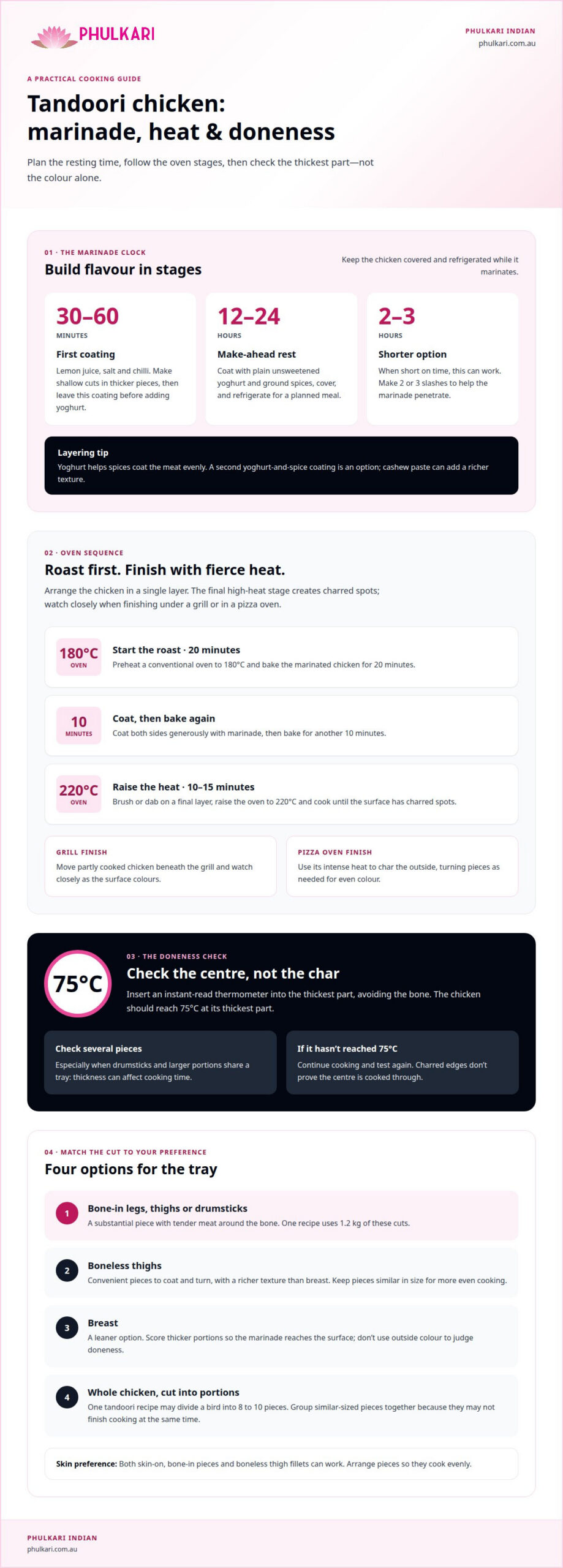
Coat the chicken with a first marinade of lemon juice, salt and chilli. Make a few shallow cuts in thicker pieces so the seasoning can reach beyond the surface. Leave this first coating for 30 minutes to an hour before adding the yoghurt mixture. Keep the chicken in the kitchen refrigerator during this stage, rather than leaving it out.
-
Coat the chicken in the yoghurt and spice marinades
Mix plain yoghurt with ground spices to make the main marinade, then work it over each piece. For a layered version, add a second yoghurt-and-spice coating, with cashew paste if desired. Yoghurt helps the spices coat the meat evenly, while cashew paste adds a richer texture. Use unsweetened yoghurt to keep the marinade savoury.
-
Marinate the chicken in the refrigerator
Cover the coated chicken and refrigerate it for 12 to 24 hours for a make-ahead tandoori chicken recipe. An overnight rest suits a planned meal, while 2 to 3 hours can work when you’re short on time; make 2 or 3 slashes to help the marinade penetrate. Keep the dish refrigerated throughout. Before cooking, check that every piece remains coated, then follow the cooking method’s temperature and timing.
Charring the chicken under a grill or in a pizza oven
Roast the marinated pieces first, then use intense top heat to create charred spots. A traditional tandoor is a clay oven that cooks with fierce radiant heat. At home, a grill or pizza oven can give the chicken a similar finish.
-
Set the oven temperature
Preheat a conventional oven to 180°C and arrange the chicken pieces in a single layer. Bake for 20 minutes, then coat both sides generously with marinade. Bake for another 10 minutes before brushing or dabbing on a final layer. Raise the oven temperature to 220°C and cook for a further 10 to 15 minutes, until the surface has charred spots.
To finish under a grill, move the partly cooked chicken beneath it and watch closely as the surface colours. In a pizza oven, use the intense heat to char the outside, turning the pieces as needed for even colour. Because oven temperatures vary, judge doneness by the chicken, not colour alone.
-
Check the internal temperature
Insert an instant-read thermometer into the thickest part of a piece, avoiding the bone. The chicken should reach 75°C at its thickest part. Check several pieces, especially if drumsticks and larger portions share the tray, because their thickness can affect cooking time.
Charred edges don’t prove the centre is cooked through. If a piece hasn’t reached 75°C, continue cooking and test again. A recipe’s roasting or grilling time is a guide; the thermometer reading gives you a clear check after the final blast of heat.
Chicken cuts for tandoori chicken
Should tandoori chicken be cooked with the skin on or off? Both can work: recipes may use bone-in, skin-on pieces or boneless thigh fillets. Choose the cut and texture you prefer, and arrange the pieces so they cook evenly.
- Choose bone-in legs, thighs or drumsticks for a substantial piece with tender meat around the bone. One recipe uses 1.2 kg of these cuts. Their shape suits an Indian-style preparation where masala coats the surface and charred edges add contrast.
- Pick boneless thighs when you want convenient pieces to coat and turn. Thighs have a richer texture than breast, while breast offers a leaner option. Keep pieces similar in size so they cook at a more even pace, and check the thickest part for doneness.
- Use breast with care. Score thicker breast portions so the marinade reaches the surface and seasoning can cling. A yoghurt marinade can carry ground spices, garlic and ginger across the meat. Avoid relying on red food colouring to judge doneness; colour on the outside doesn’t show whether the centre is cooked.
- Cut a whole chicken into portions if you want a mix of cuts at the table. A tandoori recipe may divide one bird into 8 to 10 pieces. Arrange similar-sized pieces together, since a small piece and a large thigh won’t necessarily finish cooking together.
Phulkari Indian Balgowlah: Tandoori lamb cutlets
At Phulkari Indian in Balgowlah, tandoori lamb cutlets offer a ready-to-enjoy alternative if you like the smoky, spiced character of tandoori cooking but want something other than chicken. They bring a different cut and flavour to the table while keeping the meal rooted in Indian cuisine.
For a shared meal, pair them with Garlic Naan, or choose another favourite such as Butter Chicken or Lamb Rogan Josh. Each brings its own character to a warmly spiced dinner, whether you’re sharing a meal or choosing something for yourself.
If you’d like to enjoy a tandoori dish without preparing it at home, contact Phulkari Indian Balgowlah.
Let your next meal bring people together
Knowing how tandoori chicken is cooked can help you plan more than a recipe: it can shape the mood of a meal. Consider the experience you want, from a relaxed dinner to a spread made for sharing. Think about aroma, colour and texture, and let each dish bring its own character.
Cooking with Indian flavours invites curiosity. You might explore how familiar ingredients meet in a new combination, or choose a restaurant meal when you’d rather savour the craft without tending the oven. A shared table turns those choices into conversation, with every plate adding its own warmth. The best next step is the one that suits your appetite and the occasion.
May your next meal bring plenty of flavour and good company.
Frequently Asked Questions
What ingredients are used in tandoori chicken marinade?
A common marinade combines thick plain yoghurt with lemon juice, garlic, ginger and spices such as garam masala, ground coriander and chilli powder. Some versions add tomato paste or paprika for colour and depth. Mix the ingredients until smooth before coating the chicken, so the spices spread evenly instead of clumping in one spot.
How long should chicken marinate for tandoori chicken?
For a planned meal, marinate the chicken overnight in the refrigerator to let the seasoning settle into the scored surfaces. If you have less time, make a few cuts in each piece and use a shorter marinade. The thickness of the pieces matters: larger bone-in portions need more time than smaller, evenly cut pieces.
How is tandoori chicken traditionally cooked in a clay tandoor oven?
Traditionally, tandoori chicken cooks in a clay tandoor, where intense heat surrounds the marinated meat and chars its outer surface. The chicken is arranged inside the oven for direct exposure to the heat. This produces a smoky, roasted flavour and darkened spots, while the marinade helps keep the meat moist as it cooks.
How to cook tandoori chicken in a home oven?
Arrange the coated chicken in a single layer on an oven-safe tray, leaving space between pieces so hot air can circulate. Roast first, then brush with marinade and finish at a higher heat for a lightly charred surface. For more colour, use the grill briefly at the end and watch closely to prevent scorching.
What temperature and cooking time does tandoori chicken need?
One oven method starts at 180°C, then raises the heat to 220°C to finish and char the chicken. Timing varies with cut and thickness, so use the recipe as a guide rather than relying on appearance alone. Check the thickest part with an instant-read thermometer; the recipe target is 75°C.


