
For two diners, a crisp vegetarian starter and a tandoori dish make a balanced beginning before the mains. Knowing what starters to order with Indian mains is also about choosing portions that leave room to enjoy the rest of the meal.
It’s easy to focus on flavours and overlook portions, especially when everyone wants to try something different. This guide explains how an Indian restaurant can help you choose vegetarian tandoor and fried starters, match their textures with your mains, and estimate a sharing order for your group. You’ll find practical starting points for smaller tables and larger gatherings, with variety taking priority over ordering more than you need.
Key Takeaways
- For two diners, consider pairing a crisp vegetarian starter with a tandoori option for contrasting textures.
- Choose fried or grilled starters to bring crunch or smoky flavour to the meal.
- Scale shared starters to your group and the richness of the mains, rather than ordering by appetite alone.
- Match vegetarian starters with the flavours and textures of your chosen vegetable mains for a more balanced meal.
2. Vegetarian tandoor and fried starters
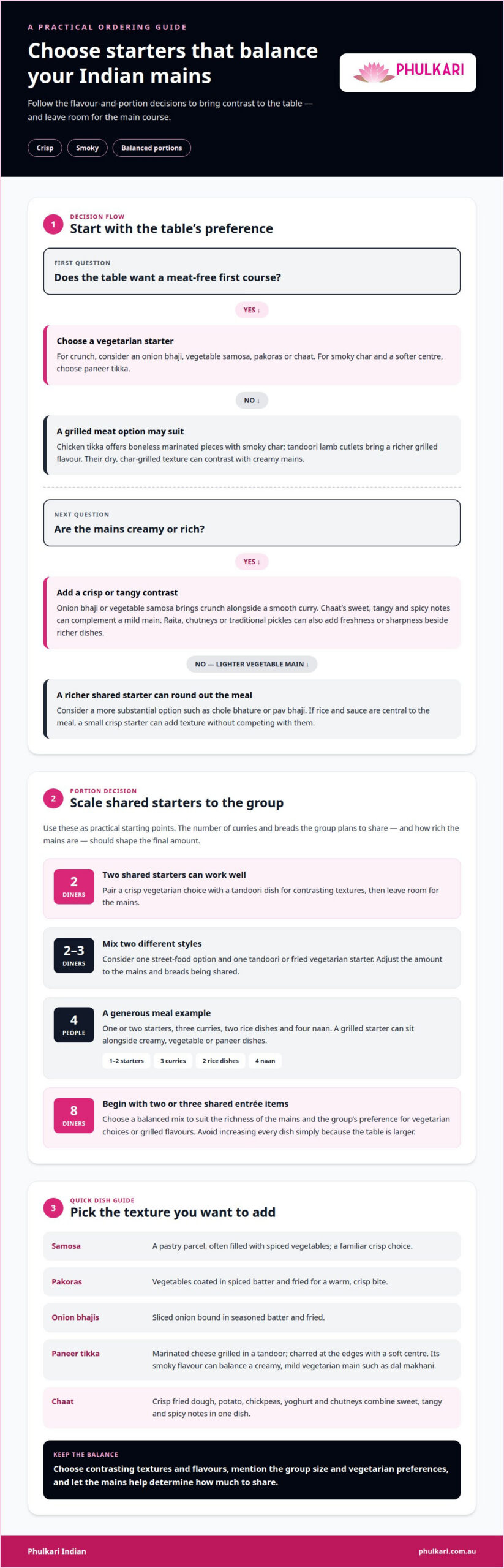
For two people, pair a crisp vegetarian starter with a tandoori dish, then leave room for the mains. Golden crunch and smoky char bring contrast to the meal without making every first course feel alike. Samosas and pakoras are familiar choices for diners trying Indian starters for the first time.
What are the differences between samosas, pakoras, bhajis and paneer tikka? A samosa is a pastry parcel, often filled with spiced vegetables, while pakoras are vegetables coated in spiced batter and fried. Onion bhajis are sliced onion bound in seasoned batter and fried; paneer tikka is marinated cheese grilled in a tandoor.
Paneer tikka’s yoghurt and spices form a savoury coating; grilling chars the edges while the centre stays soft. Pair it with dal makhani or another creamy, mild vegetarian main for a balance of smoky and rich flavours. Onion bhaji or vegetable samosa adds crispness instead, which contrasts well with a smooth curry such as butter chicken.
Vegetarian mains don’t have to mean curry alone. Vegetable biryani brings fragrant rice, vegetables and layered spices, while rajma chawal pairs kidney beans with rice. If those are central to the meal, a small, crisp starter can introduce texture without competing with the rice and sauce. Ask the restaurant to guide the pairing around the richness of your chosen mains.
For a non-vegetarian tandoor option, chicken tikka offers boneless, marinated pieces with smoky char; tandoori lamb cutlets bring a richer grilled flavour. These can contrast with creamy mains such as butter chicken, thanks to their dry, char-grilled texture. Choose a vegetarian starter if the table wants to keep the first course meat-free.
3. Getting help with starter quantities for a group
Starter portions should suit the table, not compete with the mains. For two diners, two shared starters can work well before the main course. A group of two or three might choose one street-food option and one tandoori or fried vegetarian starter. Consider how many curries and breads everyone plans to share when deciding how much to order.
For four people, a generous meal can include one or two starters, three curries, two rice dishes and four naan. That spread leaves room for contrasting flavours: a grilled starter such as chicken tikka, a creamy curry with butter, and a vegetable or paneer dish. Garlic naan helps everyone scoop up sauce, while rice gives the table another way to enjoy the curries.
For eight diners, two or three shared entree items offer a starting point. The best mix depends on whether the mains are rich or light, and whether the group prefers vegetarian choices or grilled flavours. Choose a balanced combination rather than increasing every dish as the table grows.
When deciding, mention the group size, any preference for vegetarian dishes, and whether you want a substantial first course. A restaurant can then recommend a suitable combination, such as a crisp starter alongside a tandoori option, with the mains and breads shaping the final amount. For help planning a shared Indian meal, consider the mix of dishes your group would enjoy most.
3. Which Indian starters can a restaurant recommend with vegetarian Indian mains?
Match a vegetarian starter to the main’s richness, texture and flavour. With a creamy curry, a tangy or crisp opening adds contrast; with a lighter vegetable dish, a richer shared starter can make the meal feel more complete. Chole bhature and pav bhaji are more substantial options to share before the mains.
For a lighter beginning, chaat combines crisp fried dough, potato, chickpeas, yoghurt and chutneys. Its sweet, tangy and spicy notes offer several flavours in one dish, so it can complement a mild main without adding another curry. Hot pakoras also suit lunch when the table wants something warm and crisp before its vegetarian dishes.
Raita, a yoghurt-based side, cools the palate and adds freshness alongside a rich main. Chutneys and traditional pickles can bring tang or sharpness to heavier dishes. A restaurant can suggest which accompaniment suits the meal’s flavour profile, while naan gives diners a soft, oven-baked bread for scooping up curry sauce.
For a vegetarian meal, consider how the starter sits beside the main rather than choosing dishes with identical textures. A crunchy chaat before a smooth curry creates contrast; a shared chole bhature or pav bhaji makes a heartier first course. Tell the restaurant whether you want a light opening or a more filling shared dish, and it can guide the pairing.
Phulkari Indian Balgowlah
At Phulkari Indian in Balgowlah, diners can build a meal where starters and mains complement rather than crowd one another. Consider how a crisp or grilled starter will sit alongside a saucy curry, a vegetarian dish or shared bread. Contrasting textures and richness can help shape a balanced order for your table.
Butter Chicken offers a creamy main-course option, while Lamb Rogan Josh brings a different curry choice. Goan Fish Curry adds another flavour direction, and Garlic Naan is suited to enjoying with sauces. Use the mains you choose to guide the style and quantity of starters, whether you’re ordering for two or sharing with a group.
For help deciding how to pair starters with your mains, contact Phulkari Indian Balgowlah.
Make your next shared meal your own
Choosing what starters to order with Indian mains is a chance to set the mood for the meal, not just fill the table. Consider what your group enjoys: crisp or tender textures, bright chutneys or mellow sauces, and a leisurely spread or a lighter start. These preferences can help shape a considered order that leaves room for the main course.
For a table with varied tastes, a thoughtful mix makes the meal more welcoming. Let contrasting dishes create interest, and choose a pace that gives everyone time to savour each course. The right combination brings your group together around the table.
Enjoy generous flavours and good company around the table.
Frequently Asked Questions
How can restaurant staff help you order at an Indian restaurant?
To decide what starters to order with Indian mains, tell staff about your group’s spice preferences, dietary choices and appetite. Mention whether you prefer mild or medium heat, want vegetarian options, or are unsure about a curry’s richness. Staff can explain menu descriptions and suggest combinations, helping you choose dishes with variety rather than overlapping flavours.
What makes Indian starters so good for sharing?
Indian starters bring distinct flavours and textures to the table, making it easy to sample different styles together. Sharing suits diners who want to compare tangy chaat with a savoury grilled bite, for example. It also lets everyone try something new before choosing a main course.
What are popular Indian restaurant starters to share before mains?
Popular choices include chaat, pani puri and medu vada, alongside familiar fried or grilled bites. Chaat combines tangy, sweet and spicy notes; pani puri offers a crisp, filled mouthful; medu vada comes with coconut chutney and sambar. Choose according to whether your table prefers bright, crunchy flavours or a savoury starter with accompaniments.
Which Indian starters pair well with chicken curry mains?
If you’re considering what starters to order with Indian mains such as chicken curry, a crisp vegetable bite or dry grilled dish can contrast with the sauce. Tangy chaat can lift a mild, creamy curry, while a yoghurt accompaniment suits a hotter one. Let the curry’s richness and heat guide your choice.
How many Indian starters can a restaurant recommend per person?
Restaurants generally plan shared starters for the table rather than assigning a fixed amount to each diner. The right quantity depends on the group size, how substantial the starters are, and how many mains, breads and rice dishes follow. Explain whether you want a light introduction or a more substantial first course, and staff can suggest a suitable balance.


