
A satisfying Indian meal can keep its familiar grains and flavours while making room for a balanced plate. When planning a balanced Indian meal, fill half the plate with vegetables and fruit, then divide the rest between protein foods and whole grains.
This flexible approach leaves room for the colour and character of Indian cooking, from vegetables and dhal to rice, roti and millets. The balance can also vary with your health needs, activity and food preferences. Here’s how to build a balanced plate, choose whole grains and millets, and make practical adjustments without losing the pleasure of sharing a meal.
Key Takeaways
- Build a colourful plate with vegetables and fruit, protein foods and grains in balanced proportions.
- Adjust ingredients and portions to suit your health needs, activity and food preferences.
- Try brown rice or millets in place of white rice a few times a week for variety.
- Enjoy favourite Indian dishes alongside nourishing sides to bring balance and flavour to the meal.
1. Adapting meals to individual health needs
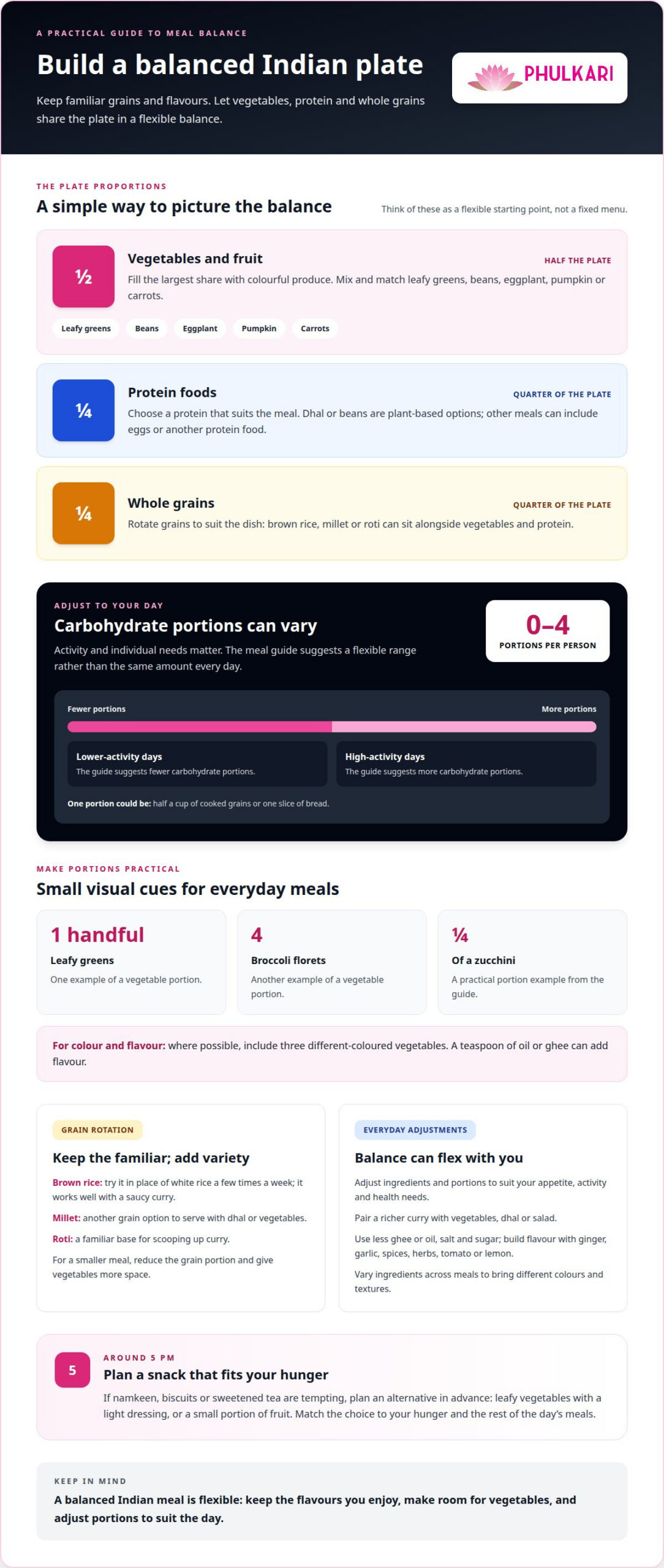
Planning a balanced Indian meal starts with a flexible plate, not a fixed menu. Aim to fill half the plate with vegetables and fruit, a quarter with protein foods, and the remaining quarter with whole grains. Adjust ingredients and portions to suit your appetite, activity and health needs. For a plant-based protein option, choose dhal or beans.
Practical portions can make the balance easier to picture. A vegetable portion might be a handful of leafy greens, four broccoli florets or a quarter of a zucchini. Where possible, include three different-coloured vegetables for variety. Add a small amount of fat for flavour, such as a teaspoon of oil or ghee. Grain portions can vary, so choose an amount that suits your meal and needs.
Carbohydrate needs can vary with activity. The meal guide suggests zero to four carbohydrate portions per person, with more on high-activity days and fewer on low-activity days. A portion could be half a cup of cooked grains or one slice of bread. Use this as a flexible starting point, rather than expecting the same plate every day.
At around 5 pm, hunger can make namkeen, biscuits or sweetened tea tempting. Plan a different snack in advance, such as leafy vegetables with a light dressing, or a small portion of fruit. A teaspoon of oil or ghee can add flavour to vegetables without turning the snack into a heavy meal. Match the choice to your hunger and the rest of your day’s meals.
2. What Does a Balanced Indian Meal Plate Look Like?
A balanced Indian plate can bring familiar favourites together with vegetables, fruit, protein and grains. Picture half the plate as colourful vegetables and fruit, a quarter as protein, and a quarter as whole grains. Keep favourite dishes on the menu, pairing a richer curry with vegetables, dhal or salad. Vary ingredients across meals: beans, eggplant, pumpkin, leafy greens and carrots offer different colours and textures.
For safe storage and reheating in Australia, refrigerate cooked meals promptly in covered containers. Reheat leftovers until steaming hot throughout, and only reheat the portion you plan to eat.
To reduce saturated fat, salt and added sugar in curries or dhal, use less ghee or oil, salt and sugar. Build flavour with ginger, garlic, spices, herbs, tomato or lemon. For affordable meal foundations, use staples such as rice, beans and potatoes, alongside vegetables that suit the meal.
A sample day might begin with vegetable poha, followed by dhal, rice and greens at lunch. For dinner, serve a vegetable curry with roti and a side salad. Swap ingredients across the week, such as beans for dhal or pumpkin for eggplant, to bring variety without changing the meal’s familiar rhythm. For more ideas for a shared Indian meal, explore Indian dining inspiration.
Meal planning can allocate around half to 1/3 of a meal to colourful vegetables, 1/4 to lean protein and 1/3 to a smart carbohydrate. Include a variety of differently coloured vegetables as part of a balanced meal. Alternate meals with smaller and larger protein portions.
3. Choosing whole grains and millets
Whole grains and millets bring variety to the grain portion of an Indian meal. Set aside a quarter of the plate for whole grains, then rotate options to suit the dish. Brown rice can replace white rice a few times a week, while millets offer another alternative. At lunch, serve one or two rotis, or a modest portion of rice or millet.
Match the grain’s texture to the rest of the meal. Brown rice works well with a saucy curry, while millet can accompany dhal or vegetables. Roti offers a familiar base for scooping up curry. Keep the rest of the plate varied, so grains complement rather than crowd out vegetables and protein.
Try a simple rotation across the week: brown rice with one meal, millet with another, and roti at lunch. Prepare rice or millet according to the packet instructions, then serve it with vegetables, dhal, beans, eggs or another protein food. For a smaller meal, reduce the grain portion and give vegetables more space.
Choose grains you enjoy and can use in several dishes. Cooked brown rice can accompany a vegetable curry one day, while millet can be served with dhal another day. This keeps familiar Indian flavours at the centre while making grain choices less repetitive. Start by swapping grains a few times a week, then adjust the rotation to suit your meals.
Phulkari Indian Balgowlah
At Phulkari Indian Balgowlah, you can enjoy familiar Indian flavours without having to plan and cook the meal yourself. Butter Chicken, Lamb Rogan Josh and Goan Fish Curry offer distinct curry options, while Garlic Naan can accompany the meal. Use the plate ideas in this guide to consider your preferences and how each dish fits into your overall meal.
Whether you’re meeting family or enjoying dinner with friends, a shared meal can make room for different tastes. Choose from the dishes that appeal to you, and keep your individual health needs in mind as you decide what suits your plate. To discuss a meal at Phulkari Indian Balgowlah, contact the restaurant.
Make your next meal your own
Planning a balanced Indian meal can bring intention to the table without setting aside the flavours and traditions you enjoy. Let your next meal reflect what suits you today: the ingredients you have, your preferences and the people sharing the table. Thoughtful choices can make a meal feel considered, satisfying and distinctly yours.
When you’d rather savour Indian cooking than organise every part of the meal yourself, Phulkari Indian Balgowlah offers a welcoming setting for familiar flavours and good company. Bring your own sense of balance to the occasion and choose dishes that suit the moment.
May your next meal be full of colour, comfort and the pleasure of sharing it.
Frequently Asked Questions
What Does a Balanced Indian Meal Plate Look Like?
Think of the plate as a mix of vegetables and fruit, protein foods, and grains or other starchy foods. For example, pair a vegetable curry with dhal and rice, and add fruit separately if it suits the meal. Balance can come from the whole plate, rather than from expecting every dish to contain every food group.
What does a balanced Indian meal include according to Australian dietary guidelines?
A balanced meal can include vegetables and fruit, grain foods, protein foods and dairy, with only small amounts of salt and added sugars. For an Indian meal, that could mean vegetables with rice or roti, plus dhal, beans, eggs or another protein. Vary the combination across meals to reflect preferences and health needs.
What are healthy portion sizes for an Indian meal?
Portions depend on the foods served and individual needs. As practical examples, a meal guide uses one cup of cooked legumes or two eggs as protein portions. For grains, choose a portion that suits the meal and your needs. Treat these examples as planning references, not fixed serving prescriptions for everyone.
How can I build a balanced Indian thali with vegetables, protein, grains and dairy?
Choose a vegetable dish, a protein-rich dhal or bean dish, and rice or roti for the grain. Add cucumber and yoghurt raita as a dairy side, then include fruit if it suits your meal. A thali lets you serve these elements separately, making it easier to choose a mix that suits your appetite.
What are nutritious vegetarian protein options in Indian cooking?
Dhal, chickpeas, kidney beans, eggs and tofu can all provide protein in a vegetarian meal. For a simple combination, serve dhal with vegetables and a grain, or add chickpeas to a curry. Paneer is another familiar ingredient; pair it with vegetables and choose grains to complement the rest of the meal.


